

Have I Been Pwned? Why Checking for Data Breaches Isn’t Enough
 Pete
Pete
- March 25, 2026 , Pete
- Password & security
If your email doesn’t appear in Have I Been Pwned, it may seem like your accounts are safe. But that can be misleading.
In reality, there is often a delay between a breach happening and stolen data appearing online, including in private hacker forums. By the time credentials are exposed, they may have already been used.
This makes it difficult to know if your account is compromised until it is too late. In this article, we explain why this happens, how to recognize early signs that something is not right, and what you can do to reduce your exposure.
What Does “Have I Been Pwned” Mean?
Have I Been Pwned is a popular tool that lets you check whether your email address or passwords have appeared in known data breaches. It works by comparing your information against large databases of leaked credentials collected from publicly disclosed incidents.
If your data is found, it means your credentials were exposed in a breach at some point. If nothing appears, it usually means your data has not been detected in publicly available breach databases.
However, this does not guarantee your accounts are safe. Not all breaches are disclosed immediately, and not all stolen data becomes publicly available.
Many people rely on tools like Have I Been Pwned to check their exposure, but these tools can only show what is already known. That’s why it’s important to stay one step ahead of breaches by reducing the risk before stolen credentials can be used.
Why You Don’t See Breaches Coming
In many cases, attackers gain access to systems and data long before anyone outside the company is aware of the incident. During this time, stolen credentials may already be at risk of being used or misused.
A good example is the Oracle Cloud incident in February 2025, which was widely reported as a major security breach.
Attackers gained access to sensitive data, including login credentials and encryption keys, potentially affecting more than 140,000 tenants. However, the breach was only officially confirmed weeks later, and full details about affected accounts were never clearly disclosed.
This means that even if you had an Oracle account, you might not have known whether your data was exposed or already being used by attackers.
And this is not unique to one company. Similar patterns happen in many breaches, large and small.
Early Signs Your Account May Be Compromised
Even if your credentials have not appeared in any breach database, there may already be signs that something is not right.
Here are some of the most common warning signals to watch for:
- You receive login alerts from devices or locations you do not recognize
- You get password reset emails you did not request
- Your accounts show activity you do not remember
- You notice changes to account settings or contact details
- You are logged out of services unexpectedly
These signs do not always mean your account has been compromised, but they should never be ignored. In many cases, they appear before a breach becomes publicly known.
What Happens If You Ignore the Signs
If early warning signs are ignored, attackers may gain ongoing access to your accounts.
This can lead to unauthorized transactions, data theft, or further attacks such as phishing attempts targeting your contacts.
Recognizing and acting on these signals early can significantly reduce the impact.
What Actually Protects You Before a Breach Is Detected
Even if you cannot prevent every data breach, you can reduce the risk to your accounts.
The most effective protection comes from limiting how much damage stolen credentials can cause:
- Use strong unique passwords for every account
- Enable two-factor authentication whenever possible
- Monitor your accounts for unusual activity
- Keep track of which services you use and where your data may be exposed
Taking these steps helps ensure that even if your data is compromised, attackers cannot easily use it.
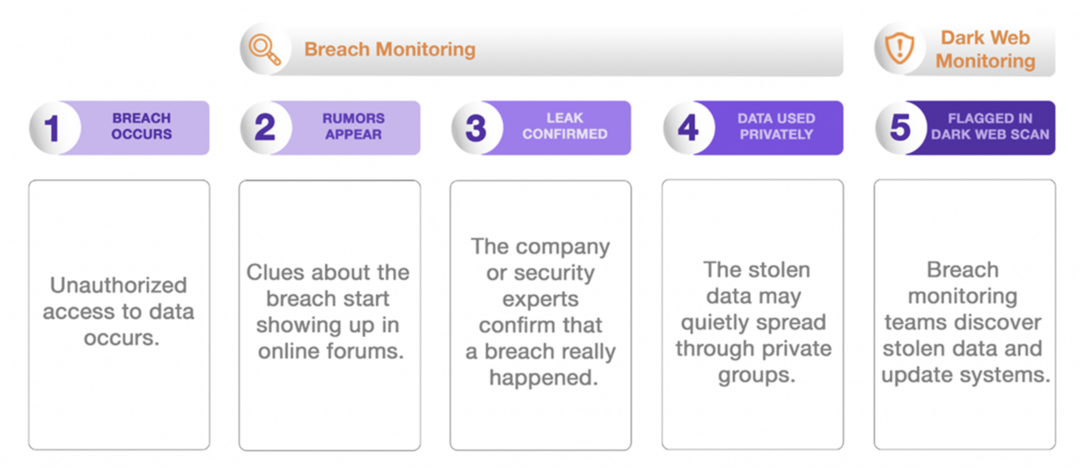
Why Breach Alerts Often Come Too Late
Many people rely on dark web monitoring services to know if their data has been exposed. However, these alerts usually appear only after stolen credentials are published or discovered.
In reality, attackers often act much earlier.
On many websites, passwords are stored in encrypted form. After a breach, attackers may spend time attempting to decrypt this data or testing it across other services.
In some cases, stolen credentials are never published at all. Instead, they are used quietly in automated attacks such as credential stuffing, where attackers try known email and password combinations across multiple sites.
This means your accounts could already be at risk long before any alert reaches you.
Not All Breaches Make Headlines
The Oracle breach made international news, and you've likely heard about it already. However, countless smaller breaches never reach mainstream media, leaving users unaware and unprepared.
Many incidents affect smaller services, third-party providers, or niche platforms that rarely receive public attention. In these cases, your data may still be exposed, but you may never hear about it.
This makes it even harder to know if your accounts are at risk, especially if you rely only on public reports or breach databases. In other words, the absence of news does not guarantee your data is safe.
Stay Informed Without Feeling Overwhelmed
Staying informed about potential security issues should not feel overwhelming.
Instead of trying to track every new breach manually, it helps to focus only on the services and accounts you actually use.
This is where Breach Monitoring becomes important. Instead of waiting for credentials to appear online, it focuses on detecting incidents and risks as they emerge.
You can learn more about how this works on our Dark Web Monitoring page.
These tools monitor a wide range of sources, such as:
- News outlets
- Security blogs and advisories
- Hacker forums
- Public and private threat intelligence sources
This allows you to receive timely and relevant alerts when a service connected to your accounts is reported in a breach, so you can take action early.
Even if your credentials have not appeared online yet, you can still be notified about emerging risks, along with clear recommendations on what to do next.
As with all Sticky Password features, your privacy remains protected. Monitoring happens locally on your device, and your login details are never shared externally.
This way, you can stay informed and take action before a potential issue becomes a real problem.